Meaning:
「〜ておく」 expresses doing something in advance,
for future convenience, or as preparation.
Grammar Point:
Used when the speaker performs an action beforehand
so that a future situation becomes easier or smoother.
Formation:
Verb-てform + おく / Verb-てform + おきます
日本語 / にほんご / Japanese
(1) 私が晩ご飯を作っておく / 作っておきます。
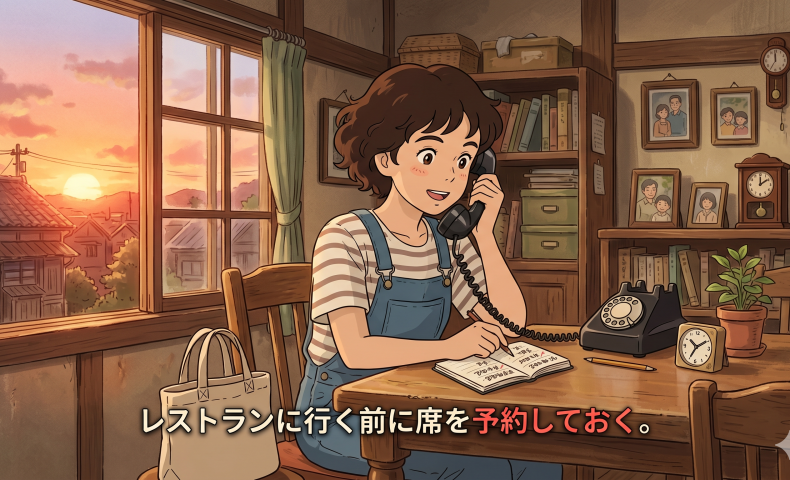
(2) レストランに行く前に席を予約しておく / 予約しておきます。
(3) 家を出る前に弟はドアに鍵をかけておく / かけておきます。
(4) 彼女と会う前に私は場所を調べておいた / 調べておきました。
(5) 父の誕生日の前に母はプレゼントを選んでおいた / 選んでおきました。
(6) 旅行の前に友達は地図をかばんに入れておいた / 入れておきました。
ことばと表現 / Words & Expressions
晩ご飯【ばんごはん ̄ /Bangohan/】 dinner
予約【よやく ̄ /Yoyaku/】 reservation
鍵【かぎ ̄ /Kagi/】 key
場所【ばしょ ̄ /Basho/】 place location
調べる【しらべ\る /Shiraberu/】 to check investigate
誕生日【たんじょうび\ /Tanjōbi/】 birthday
プレゼント【プレゼ\ント /Purezento/】 present gift
選ぶ【えら\ぶ /Erabu/】 to choose
地図【ち\ず /Chizu/】 map
かばん【かばん ̄ /Kaban/】 bag
英語 / えいご / English
(1) I will prepare dinner in advance.
(2) Before going to the restaurant, I will reserve a seat.
(3) Before leaving the house, my younger brother locks the door.
(4) Before meeting her, I checked the location beforehand.
(5) Before my father’s birthday, my mother chose a present in advance.
(6) Before the trip, my friend put a map in the bag ahead of time.
ひらがな / Hiragana
(1) わたしがばんごはんをつくっておく / つくっておきます。
(2) れすとらんにいくまえにせきをよやくしておく / よやくしておきます。
(3) いえをでるまえにおとうとはどあにかぎをかけておく / かけておきます。
(4) かのじょとあうまえにわたしはばしょをしらべておいた / しらべておきました。
(5) ちちのたんじょうびのまえにはははぷれぜんとをえらんでおいた / えらんでおきました。
(6) りょこうのまえにともだちはちずをかばんにいれておいた / いれておきました。
ローマ字 / Roman characters
(1) Watashi ga bangohan o tsukutte oku / tsukutte okimasu.
(2) Resutoran ni iku mae ni seki o yoyaku shite oku / yoyaku shite okimasu.
(3) Ie o deru mae ni otōto wa doa ni kagi o kakete oku / kakete okimasu.
(4) Kanojo to au mae ni watashi wa basho o shirabete oita / shirabete okimashita.
(5) Chichi no tanjōbi no mae ni haha wa purezento o erande oita / erande okimashita.
(6) Ryokō no mae ni tomodachi wa chizu o kaban ni irete oita / irete okimashita.





No comments yet.