
Meaning:
Used to express the speaker’s wondering, uncertainty, or mild curiosity.
Often used when thinking to oneself.
Common in casual conversation.
Grammar Point:
「〜かな」 is attached to the plain form of verbs, adjectives, and nouns.
It expresses internal questioning such as “I wonder…” or “Maybe…”.
Frequently used by both men and women, though 「〜かしら」 is more common for women.
Formation:
Verb(plain form)+ かな
Noun + かな
い-adjective + かな
な-adjective + かな
日本語 / にほんご / Japanese
(1) 彼女はあの映画を覚えているかな。
(2) あのお店はもう閉まったかな。
(3) あの人は誰かな。
(4) 明日、集合時間は何時かな。
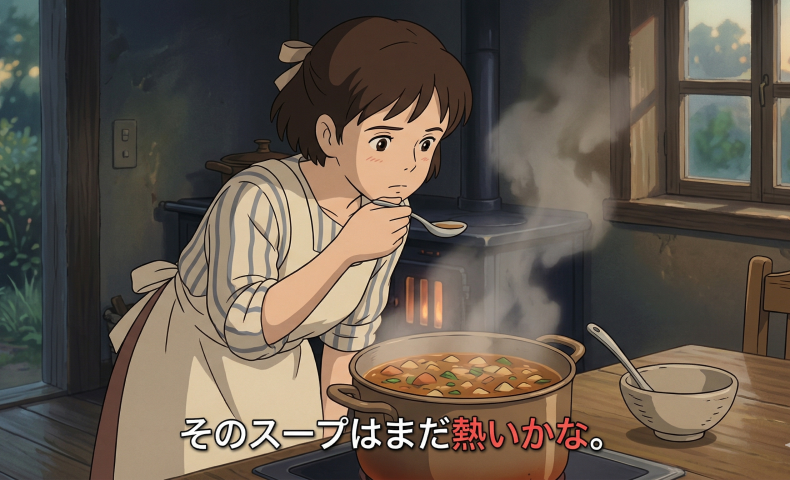
(5) そのスープはまだ熱いかな。
(6) このカレーは辛いかな。
(7) この問題は簡単かな。
(8) 明後日、彼女は暇かな。
ことばと表現 / Words & Expressions
覚える【おぼえる ̄ /Oboeru/】 to remember, to memorize
集合時間【しゅうごうじかん ̄ /Shūgōjikan/】 meeting time, assembly time
辛い【からい ̄ /Karai/】 spicy, hot
問題【もんだい ̄ /Mondai/】 problem, question
簡単【かんたん ̄ /Kantan/】 easy, simple
明後日【あさって ̄ /Asatte/】 the day after tomorrow
暇【ひま ̄ /Hima/】 free (time), leisure
英語 / えいご / English
(1) I wonder if she remembers that movie.
(2) I wonder if that shop has already closed.
(3) I wonder who that person is.
(4) I wonder what time the meeting is tomorrow.
(5) I wonder if that soup is still hot.
(6) I wonder if this curry is spicy.
(7) I wonder if this problem is easy.
(8) I wonder if she is free the day after tomorrow.
ひらがな / Hiragana
(1) かのじょはあのえいがをおぼえているかな。
(2) あのおみせはもうしまったかな。
(3) あのひとはだれかな。
(4) あした、しゅうごうじかんはなんじかな。
(5) そのすーぷはまだあついかな。
(6) このかれーはからいかな。
(7) このもんだいはかんたんかな。
(8) あさって、かのじょはひまかな。
ローマ字 / Roman characters
(1) Kanojo wa ano eiga o oboete iru kana.
(2) Ano omise wa mō shimatta kana.
(3) Ano hito wa dare kana.
(4) Ashita, shūgō jikan wa nanji kana.
(5) Sono sūpu wa mada atsui kana.
(6) Kono karē wa karai kana.
(7) Kono mondai wa kantan kana.
(8) Asatte, kanojo wa hima kana.




No comments yet.