
Meaning:
Used to express possibility, uncertainty, or a guess.
Equivalent to “might”, “may”, or “possibly” in English.
Grammar Point:
「〜かもしれない」 expresses that the speaker thinks something is possible but not certain.
It attaches to the plain form of verbs, adjectives, and nouns.
The polite form is 「〜かもしれません」.
Formation:
Verb(plain) + かもしれない
Noun + かもしれない
いajd + かもしれない
なadj + かもしれない
日本語 / にほんご / Japanese
(1) 明日、店が閉まるかもしれない / 閉まるかもしれません。
(2) 今日、手紙が届くかもしれない / 届くかもしれません。
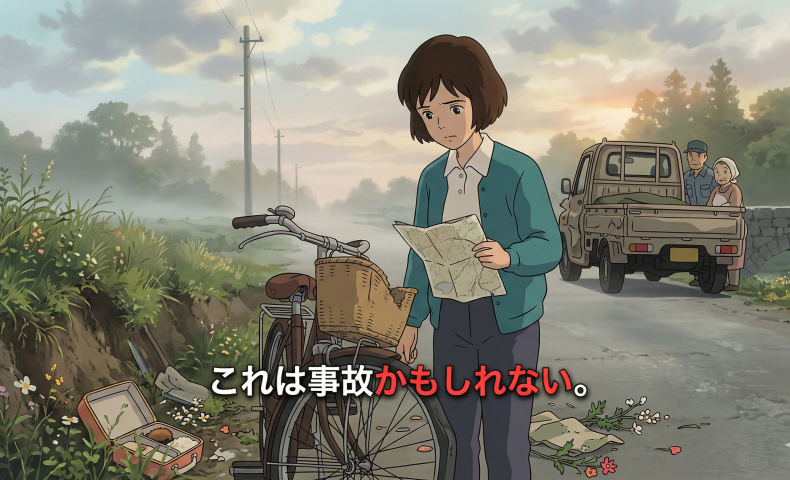
(3) これは事故かもしれない / 事故かもしれません。
(4) これは夢かもしれない / 夢かもしれません。
(5) あのレストランは音楽がうるさいかもしれない / うるさいかもしれません。
(6) 明後日、天気が悪いかもしれない / 悪いかもしれません。
(7) 彼女は映画が好きかもしれない / 好きかもしれません。
(8) その仕事は簡単かもしれない / 簡単かもしれません。
ことばと表現 / Words & Expressions
届く【とどく ̄ /Todoku/】 to reach, to be delivered
事故【じこ ̄ /Jiko/】 accident
夢【ゆめ ̄ /Yume/】 dream
うるさい【うるさ\い /Urusai/】 noisy, loud
明後日【あさって ̄ /Asatte/】 the day after tomorrow
簡単【かんたん ̄ /Kantan/】 easy, simple
英語 / えいご / English
(1) The shop might close tomorrow.
(2) A letter might arrive today.
(3) This might be an accident.
(4) This might be a dream.
(5) That restaurant’s music might be loud.
(6) The weather might be bad the day after tomorrow.
(7) She might like movies.
(8) That job might be easy.
ひらがな / Hiragana
(1) あした、みせがしまるかもしれない / しまるかもしれません。
(2) きょう、てがみがとどくかもしれない / とどくかもしれません。
(3) これはじこかもしれない / じこかもしれません。
(4) これはゆめかもしれない / ゆめかもしれません。
(5) あのれすとらんはおんがくがうるさいかもしれない / うるさいかもしれません。
(6) あさって、てんきがわるいかもしれない / わるいかもしれません。
(7) かのじょはえいががすきかもしれない / すきかもしれません。
(8) そのしごとはかんたんかもしれない / かんたんかもしれません。
ローマ字 / Roman characters
(1) Ashita, mise ga shimaru kamoshirenai / shimaru kamoshiremasen.
(2) Kyō, tegami ga todoku kamoshirenai / todoku kamoshiremasen.
(3) Kore wa jiko kamoshirenai / jiko kamoshiremasen.
(4) Kore wa yume kamoshirenai / yume kamoshiremasen.
(5) Ano resutoran wa ongaku ga urusai kamoshirenai / urusai kamoshiremasen.
(6) Asatte, tenki ga warui kamoshirenai / warui kamoshiremasen.
(7) Kanojo wa eiga ga suki kamoshirenai / suki kamoshiremasen.
(8) Sono shigoto wa kantan kamoshirenai / kantan kamoshiremasen.




No comments yet.