
Meaning:
Used to express noticing or realizing something.
Means “to notice,” “to become aware of,” or “to realize.”
Grammar Point:
「〜に気がつく」 attaches to nouns or clauses (こと).
Indicates that the speaker becomes aware of something they hadn’t noticed before.
Formation:
Noun + に気がつく
Verb-dictionary form + こと + に気がつく
日本語 / にほんご / Japanese
(1) 私はドアの音に気がついた / 気がつきました。
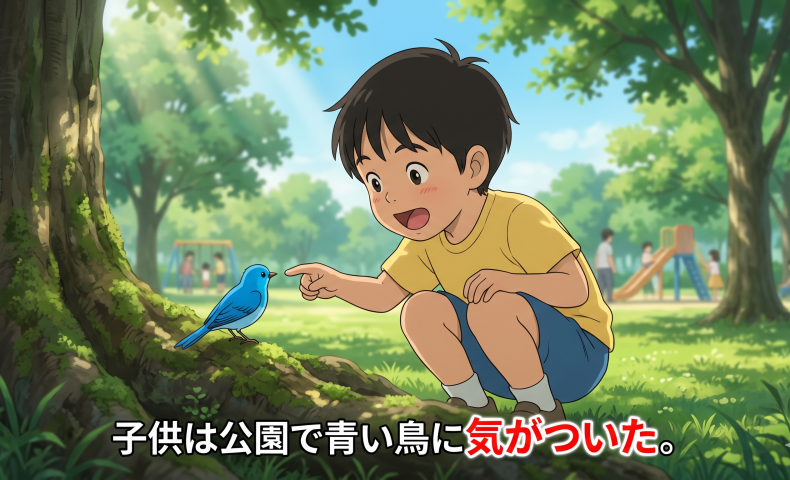
(2) 子供は公園で青い鳥に気がついた / 気がつきました。
(3) 父は空の変化に気がついた / 気がつきました。
(4) 私は彼が泣いていることに気がついた / 気がつきました。
(5) 母は電話が鳴っていることに気がついた / 気がつきました。
(6) その女の子は犬が吠えていることに気がついた / 気がつきました。
ことばと表現 / Words & Expressions
気がつく【きがつ\く /Ki ga tsuku/】 to notice, to realize
変化【へんか\ /Henka/】 change
泣く【なく ̄ /Naku/】 to cry
鳴る【なる ̄ /Naru/】 to ring, to sound
吠える【ほえ\る /Hoeru/】 to bark
英語 / えいご / English
(1) I noticed the sound of the door.
(2) The child noticed a blue bird in the park.
(3) My father noticed the change in the sky.
(4) I noticed that he was crying.
(5) My mother noticed that the phone was ringing.
(6) The girl noticed that the dog was barking.
ひらがな / Hiragana
(1) わたしはどあのおとにきがついた / きがつきました。
(2) こどもはこうえんであおいとりにきがついた / きがつきました。
(3) ちちはそらのへんかにきがついた / きがつきました。
(4) わたしはかれがないていることにきがついた / きがつきました。
(5) はははでんわがなっていることにきがついた / きがつきました。
(6) そのおんなのこはいぬがほえていることにきがついた / きがつきました。
ローマ字 / Roman characters
(1) Watashi wa doa no oto ni kigatsuita / kigatsukimashita.
(2) Kodomo wa kōen de aoi tori ni kigatsuita / kigatsukimashita.
(3) Chichi wa sora no henka ni kigatsuita / kigatsukimashita.
(4) Watashi wa kare ga naite iru koto ni kigatsuita / kigatsukimashita.
(5) Haha wa denwa ga natte iru koto ni kigatsuita / kigatsukimashita.
(6) Sono onnanoko wa inu ga hoete iru koto ni kigatsuita / kigatsukimashita.
















No comments yet.