
Meaning:
Expresses a conditional situation or circumstance. Used to describe what happens or what should be done in a particular case or situation.
Grammar Point:
This pattern is used to express conditions in a formal or objective way. It describes what action will be taken or what happens when a certain situation occurs.
Formation:
– Verb (plain form) + 場合(ばあい)は
– Noun + の + 場合(ばあい)は
– い-adjective + 場合(ばあい)は
– な-adjective + な + 場合(ばあい)は
日本語:
(1) 授業を休む場合は、私は先生に電話する / 電話します。
(2) 遅れる場合は、私は早めに連絡する / 連絡します。
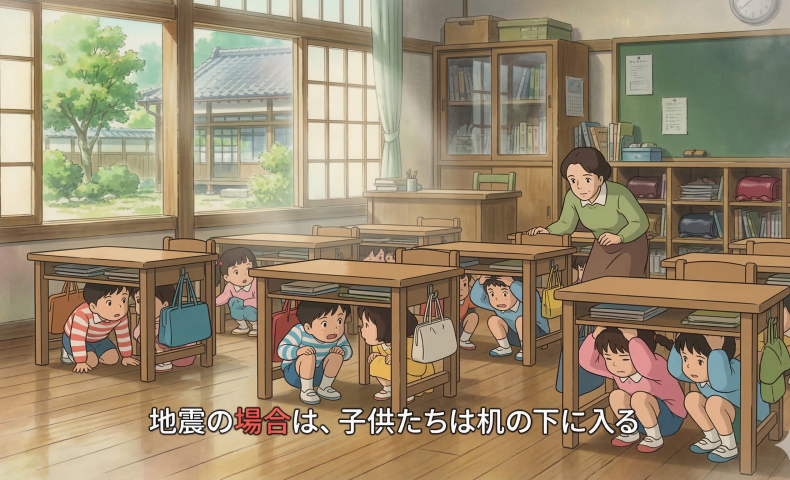
(3) 地震の場合は、子供たちは机の下に入る / 入ります。
(4) 雪の場合は、田中さんは車で来ない / 来ません。
(5) 外が寒い場合は、妹は上着を着る / 着ます。
(6) 忙しい場合は、父は後で返事をする / 返事をします。
(7) 嫌いな場合は、弟は食べない / 食べません。
(8) 暇な場合は、田中さんは友達に電話する / 電話します。
ことばと表現:
授業【じゅぎょう ̄ /Jugyō/】class; lesson
休む【やす ̄む /Yasumu/】to be absent; to take a break
電話【でんわ ̄ /Denwa/】telephone; phone call
遅れる【おく ̄れる /Okureru/】to be late
早め【はや ̄め /Hayame/】early; in advance
連絡【れんらく ̄ /Renraku/】contact; communication
地震【じしん ̄ /Jishin/】earthquake
子供【こ ̄ども /Kodomo/】child; children
机【つくえ ̄ /Tsukue/】desk
下【した\ /Shita/】under; below
入る【はい ̄る /Hairu/】to enter; to go under
雪【ゆき\ /Yuki/】snow
外【そと\ /Soto/】outside
寒い【さむ ̄い /Samui/】cold
妹【いもうと ̄ /Imōto/】younger sister
上着【うわぎ ̄ /Uwagi/】jacket; coat
着る【き ̄る /Kiru/】to wear; to put on
忙しい【いそが ̄しい /Isogashii/】busy
返事【へんじ ̄ /Henji/】reply; answer
嫌い【きら ̄い /Kirai/】dislike
暇【ひま\ /Hima/】free time
英語:
(1) In case I’m absent from class, I will call the teacher.
(2) If I’m going to be late, I will contact them early.
(3) In case of an earthquake, children will get under their desks.
(4) If it snows, Mr. Tanaka won’t come by car.
(5) If it’s cold outside, my younger sister will wear a jacket.
(6) If he’s busy, my father will reply later.
(7) If he doesn’t like it, my younger brother won’t eat it.
(8) If she has free time, Ms. Tanaka will call her friends.
ひらがな:
(1) じゅぎょうをやすむばあいは、わたしはせんせいにでんわする / でんわします。
(2) おくれるばあいは、わたしははやめにれんらくする / れんらくします。
(3) じしんのばあいは、こどもたちはつくえのしたにはいる / はいります。
(4) ゆきのばあいは、たなかさんはくるまでこない / きません。
(5) そとがさむいばあいは、いもうとはうわぎをきる / きます。
(6) いそがしいばあいは、ちちはあとでへんじをする / へんじをします。
(7) きらいなばあいは、おとうとはたべない / たべません。
(8) ひまなばあいは、たなかさんはともだちにでんわする / でんわします。
ローマ字:
(1) Jugyō wo yasumu baai wa, watashi wa sensei ni denwa suru / Denwa shimasu.
(2) Okureru baai wa, watashi wa hayame ni renraku suru / Renraku shimasu.
(3) Jishin no baai wa, kodomotachi wa tsukue no shita ni hairu / Hairimasu.
(4) Yuki no baai wa, Tanaka-san wa kuruma de konai / Kimasen.
(5) Soto ga samui baai wa, imōto wa uwagi wo kiru / Kimasu.
(6) Isogashii baai wa, chichi wa ato de henji wo suru / Henji wo shimasu.
(7) Kirai na baai wa, otōto wa tabenai / Tabemasen.
(8) Hima na baai wa, Tanaka-san wa tomodachi ni denwa suru / Denwa shimasu.





No comments yet.