
Meaning:
A casual, often masculine way to ask a question. Used in friendly or informal conversation.
Grammar Point:
「〜かい」 is an informal question marker mainly used by men in casual speech.
It attaches to the plain form of verbs and adjectives.
「〜なのかい」 is used with nouns and na-adjectives to ask for confirmation or clarification.
Formation:
V(plain)+ かい
N + なのかい
な-adjective + なのかい
日本語 / にほんご / Japanese
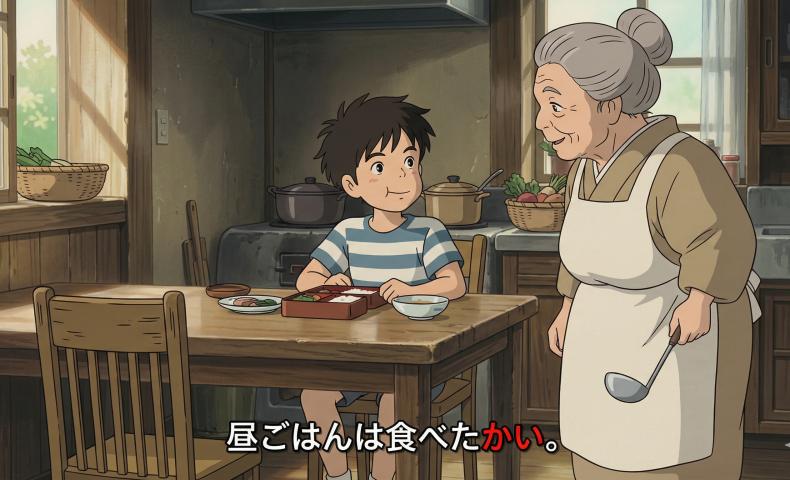
(1) 昼ごはんは食べたかい / 食べましたか。
(2) 宿題は終わったかい / 終わりましたか。
(3) 彼女は医者なのかい / 医者なのですか。
(4) それは嘘なのかい / 嘘なのですか。
(5) 君は不安なのかい / 不安なのですか。
(6) この作業は必要なのかい / 必要なのですか。
ことばと表現 / Words & Expressions
嘘【うそ ̄ /Uso/】 lie, falsehood
不安【ふあん ̄ /Fuan/】 uneasy, anxious
作業【さぎょう ̄ /Sagyō/】 work, operation
必要【ひつよう ̄ /Hitsuyō/】 necessary
英語 / えいご / English
(1) Did you eat lunch?
(2) Did you finish your homework?
(3) Is she a doctor?
(4) Is that a lie?
(5) Are you feeling uneasy?
(6) Is this task necessary?
ひらがな / Hiragana
(1) ひるごはんはたべたかい / たべましたか。
(2) しゅくだいはおわったかい / おわりましたか。
(3) かのじょはいしゃなのかい / いしゃなのですか。
(4) それはうそなのかい / うそなのですか。
(5) きみはふあんなのかい / ふあんなのですか。
(6) このさぎょうはひつようなのかい / ひつようなのですか。
ローマ字 / Roman characters
(1) Hirugohan wa tabeta kai / tabemashita ka.
(2) Shukudai wa owatta kai / owarimashita ka.
(3) Kanojo wa isha na no kai / isha na no desu ka.
(4) Sore wa uso na no kai / uso na no desu ka.
(5) Kimi wa fuan na no kai / fuan na no desu ka.
(6) Kono sagyō wa hitsuyō na no kai / hitsuyō na no desu ka.






No comments yet.