
Meaning:
Used to list examples in a non-exhaustive way.
Means “such as ~ and ~,” “things like ~,” or “~ and so on.”
Grammar Point:
「〜や〜など」 lists **examples**, not a complete list.
Softer and more open-ended than 「〜と」.
Formation:
Noun + や + Noun + など
日本語 / にほんご / Japanese
(1) 私は朝ごはんにパンや卵などを食べる / 食べます。
(2) 父はスーパーで肉や魚などを買う / 買います。
(3) 娘はデパートで洋服や靴などを買う / 買います。
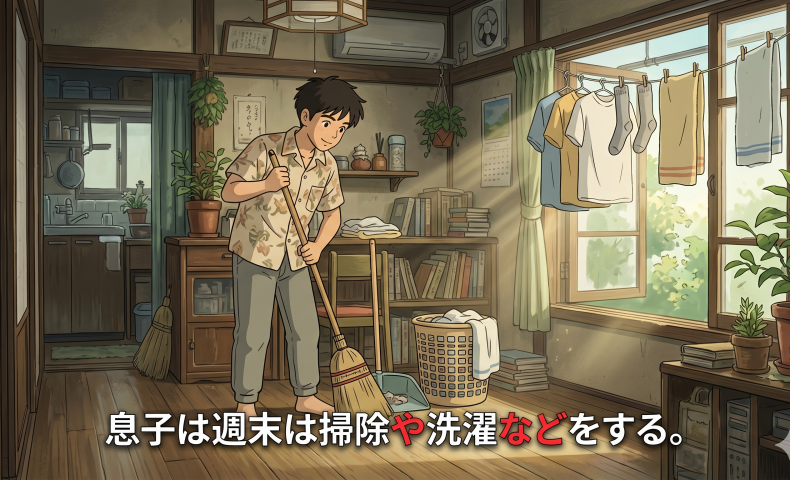
(4) 息子は週末は掃除や洗濯などをする / します。
(5) 冷蔵庫に牛乳やバターなどがある / あります。
(6) その男の子は中国語やフランス語などを話す / 話します。
ことばと表現 / Words & Expressions
洋服【ようふく ̄ /Yōfuku/】 clothes
掃除する【そうじする ̄ /Sōji suru/】 to clean
洗濯する【せんたくする ̄ /Sentaku suru/】 to do laundry
冷蔵庫【れいぞうこ ̄ /Reizōko/】 refrigerator
牛乳【ぎゅうにゅう ̄ /Gyūnyū/】 milk
バター【ばたー /Batā/】 butter
中国語【ちゅうごくご ̄ /Chūgokugo/】 Chinese (language)
フランス語【ふらんすご ̄ /Furansugo/】 French (language)
英語 / えいご / English
(1) I eat things like bread and eggs for breakfast.
(2) My father buys things like meat and fish at the supermarket.
(3) My daughter buys things like clothes and shoes at the department store.
(4) My son does things like cleaning and laundry on weekends.
(5) There are things like milk and butter in the refrigerator.
(6) That boy speaks languages such as Chinese and French.
ひらがな / Hiragana
(1) わたしはあさごはんにぱんやたまごなどをたべる / たべます。
(2) ちちはすーぱーでにくやさかななどをかう / かいます。
(3) むすめはでぱーとでようふくやくつなどをかう / かいます。
(4) むすこはしゅうまつはそうじやせんたくなどをする / します。
(5) れいぞうこにぎゅうにゅうやばたーなどがある / あります。
(6) そのおとこのこはちゅうごくごやふらんすごなどをはなす / はなします。
ローマ字 / Roman characters
(1) Watashi wa asagohan ni pan ya tamago nado o taberu / tabemasu.
(2) Chichi wa sūpā de niku ya sakana nado o kau / kaimasu.
(3) Musume wa depāto de yōfuku ya kutsu nado o kau / kaimasu.
(4) Musuko wa shūmatsu wa sōji ya sentaku nado o suru / shimasu.
(5) Reizōko ni gyūnyū ya batā nado ga aru / arimasu.
(6) Sono otokonoko wa chūgokugo ya furansugo nado o hanasu / hanashimasu.








No comments yet.