
Meaning
Must ~, Be sure to ~, Do not ~ (used for rules and instructions)
Grammar Point
When「こと」is placed at the end of a sentence, it functions as a directive
or rule. Positive form(Verb dictionary form + こと)means “must do” and
negative form(Verb ない形 + こと)means “must not do”. Commonly seen in
written notices, school rules, and official instructions.
Formation
Verb(dictionary form)+ こと ← must do
Verb(ない形)+ こと ← must not do
日本語 / にほんご / Japanese
(1)学校の規則を守ること。
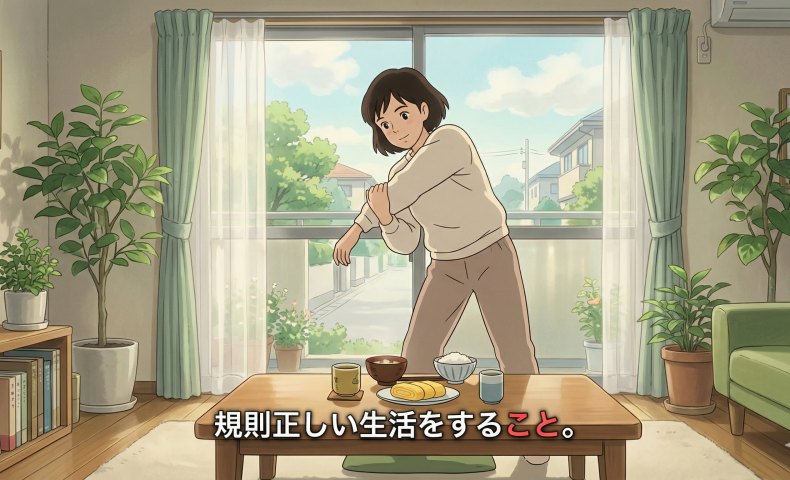
(2)規則正しい生活をすること。
(3)部屋に入る前に、必ずノックすること。
(4)外出するときは、必ず玄関の扉の鍵を閉めること。
(5)試験中は携帯電話を使わないこと。
(6)図書館では大声を出さないこと。
(7)休むときは、必ず学校に連絡すること。
ことばと表現 / Words & Expressions
規則【きそく\ /Kisoku/】rule, regulation
守る【まもる\ /Mamoru/】to follow, to obey, to keep
規則正しい【きそくただしい\ /Kisoku tadashii/】regular, well-ordered
必ず【かならず\ /Kanarazu/】without fail, always, be sure to
ノックする【ノックする ̄ /Nokku suru/】to knock
外出する【がいしゅつする ̄ /Gaishutsu suru/】to go out
玄関【げんかん\ /Genkan/】entrance, front door
扉【とびら\ /Tobira/】door
鍵を閉める【かぎをしめる\ /Kagi o shimeru/】to lock
試験中【しけんちゅう\ /Shiken chū/】during an exam
携帯電話【けいたいでんわ\ /Keitai denwa/】mobile phone, cell phone
図書館【としょかん\ /Toshokan/】library
大声を出す【おおごえをだす\ /Ōgoe o dasu/】to speak loudly, to raise one’s voice
連絡する【れんらくする ̄ /Renraku suru/】to contact, to inform
英語 / えいご / English
(1) Follow the school rules.
(2) Live a well-ordered life.
(3) Always knock before entering a room.
(4) Always lock the front door when going out.
(5) Do not use mobile phones during exams.
(6) Do not speak loudly in the library.
(7) Always contact the school when absent.
ひらがな / Hiragana
(1) がっこうのきそくをまもること。
(2) きそくただしいせいかつをすること。
(3) へやにはいるまえに、かならずノックすること。
(4) がいしゅつするときは、かならずげんかんのとびらのかぎをしめること。
(5) しけんちゅうはけいたいでんわをつかわないこと。
(6) としょかんではおおごえをださないこと。
(7) やすむときは、かならずがっこうにれんらくすること。
ローマ字 / Roman characters
(1) Gakkō no kisoku o mamoru koto.
(2) Kisoku tadashii seikatsu o suru koto.
(3) Heya ni hairu mae ni, kanarazu nokku suru koto.
(4) Gaishutsu suru toki wa, kanarazu genkan no tobira no kagi o shimeru koto.
(5) Shiken chū wa keitai denwa o tsukawanai koto.
(6) Toshokan de wa ōgoe o dasanai koto.
(7) Yasumu toki wa, kanarazu gakkō ni renraku suru koto.



No comments yet.