
Meaning
There is a possibility that ~, It is possible that ~, ~ might ~
Grammar Point
Used to express that something is possible or likely to happen. More formal
than「かもしれない」and often used in news reports, academic writing, and
formal speech.
Formation:
Verb-casual + 可能性がある
Noun + の可能性がある
日本語 / にほんご / Japanese
(1)深刻な病気の可能性がある / 可能性があります。
(2)今でも噴火の可能性がある / 可能性があります。
(3)午後、雪になる可能性がある / 可能性があります。
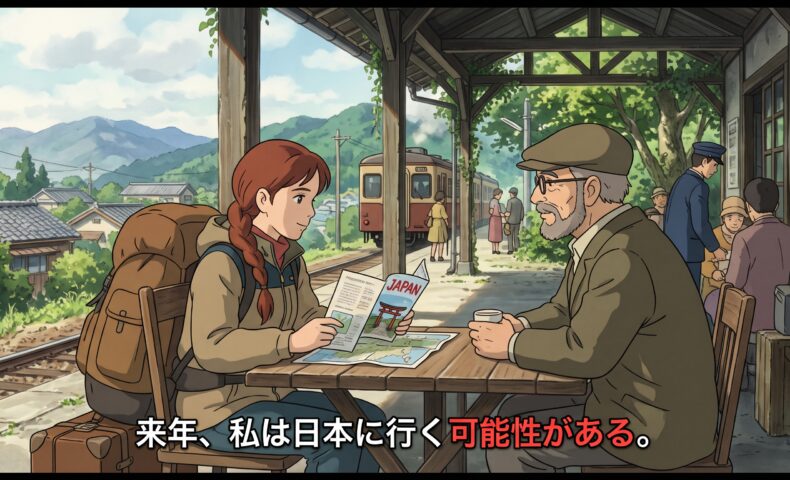
(4)来年、私は日本に行く可能性がある / 可能性があります。
(5)再来年、配送料が変わる可能性がある / 可能性があります。
(6)首相は早い時期に選挙を行う可能性があるとほのめかした / ほのめかしました。
ことばと表現 / Words & Expressions
深刻な【しんこくな\ /Shinkoku na/】serious, grave, severe
病気【びょうき\ /Byōki/】illness, disease
可能性【かのうせい\ /Kanōsei/】possibility, chance, likelihood
火山【かざん\ /Kazan/】volcano
噴火【ふんか\ /Funka/】volcanic eruption
配送料【はいそうりょう\ /Haisōryō/】delivery charge, shipping fee
変わる【かわる\ /Kawaru/】to change
首相【しゅしょう\ /Shushō/】prime minister
選挙【せんきょ\ /Senkyo/】election
行う【おこなう\ /Okonau/】to hold, to carry out
ほのめかす【ほのめかす\ /Honomekasu/】to hint, to suggest, to imply
英語 / えいご / English
(1) There is a possibility that I have a serious illness.
(2) There is still a possibility that the volcano will erupt.
(3) There is a possibility that it will snow in the afternoon.
(4) There is a possibility that I will go to Japan next year.
(5) There is a possibility that delivery charges will change the year after next.
(6) The prime minister hinted that there is a possibility of holding an election early.
ひらがな / Hiragana
(1) わたしはしんこくなびょうきのかのうせいがある / かのうせいがあります。
(2) そのかざんはいまでもふんかのかのうせいがある / かのうせいがあります。
(3) ごご、ゆきになるかのうせいがある / かのうせいがあります。
(4) わたしはらいねん、にほんにいくかのうせいがある / かのうせいがあります。
(5) さらいねん、はいそうりょうがかわるかのうせいがある / かのうせいがあります。
(6) しゅしょうははやいじきにせんきょをおこなうかのうせいがあるとほのめかした / ほのめかしました。
ローマ字 / Roman characters
(1) Watashi wa shinkoku na byōki no kanōsei ga aru / kanōsei ga arimasu.
(2) Sono kazan wa ima demo funka no kanōsei ga aru / kanōsei ga arimasu.
(3) Gogo, yuki ni naru kanōsei ga aru / kanōsei ga arimasu.
(4) Watashi wa rainen, Nihon ni iku kanōsei ga aru / kanōsei ga arimasu.
(5) Sarainen, haisōryō ga kawaru kanōsei ga aru / kanōsei ga arimasu.
(6) Shushō wa hayai jiki ni senkyo o okonau kanōsei ga aru to honomekashita / honomekashimashita.






No comments yet.