
Meaning
A formal, old-fashioned, and masculine-sounding way to give a command or strong request.
Softer than the imperative form, but still authoritative.
Grammar Point
「〜たまえ」 attaches to the **verb stem** and expresses a polite yet firm command.
It is rarely used in daily conversation today, and appears more in literature, speeches, or hierarchical settings.
Formation:
Verb-ますstem + たまえ
日本語 / にほんご / Japanese
(1) この問題に集中したまえ。
(2) ときどき私に連絡したまえ。
(3) 君の作文を手本と比べたまえ。
(4) もし町にくることがあれば、私に会いに来たまえ。
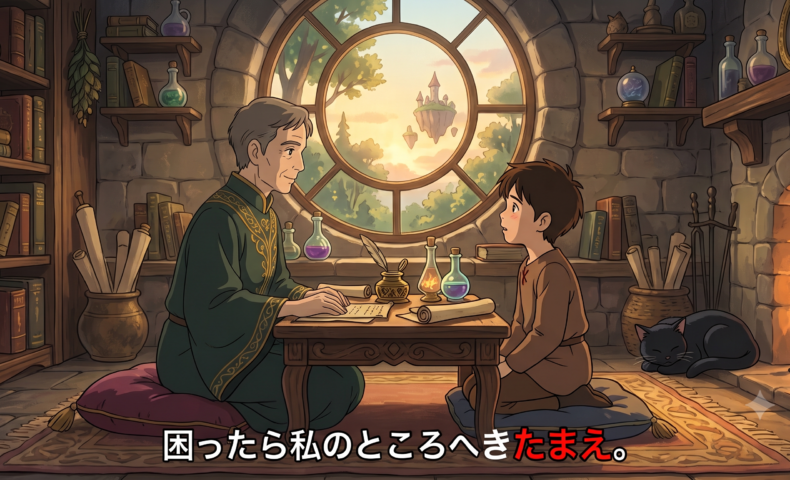
(5) 困ったら私のところへきたまえ。
(6) 一本の木が枯れたら、その場所に、もう1本植えたまえ。
ことばと表現 / Words & Expressions
– 問題【もんだい\ /Mondai/】problem, question
– 集中する【しゅうちゅうする ̄ /Syūtyū suru/】to concentrate
– ときどき【ときどき\ /Tokidoki/】sometimes
– 連絡する【れんらくする ̄ /Renraku suru/】to contact
– 作文【さくぶん ̄ /Sakubun/】composition, essay
– 手本【てほん\ /Tehon/】model, example
– 比べる【くらべる ̄ /Kuraberu/】to compare
– 困る【こまる\ /Komaru/】to be in trouble
– 枯れる【かれる ̄ /Kareru/】to wither
– 植える【うえる ̄ /Ueru/】to plant
英語 / えいご / English
(1) Focus on this problem.
(2) Contact me from time to time.
(3) Compare your essay with the model.
(4) If you ever come to town, come to see me.
(5) If you’re in trouble, come to me.
(6) If one tree dies, plant another one in that spot.
ひらがな / Hiragana
(1) このもんだいに しゅうちゅう したまえ。
(2) ときどき わたしに れんらくしたまえ。
(3) きみの さくぶんを てほんと くらべたまえ。
(4) もしまちにくることがあれば、わたしにあいにきたまえ。
(5) こまったら わたしの ところへ きたまえ。
(6) いっぽんの きが かれたら、その ばしょに、もう いっぽん うえたまえ。
ローマ字 / Roman letters
(1) Kono mondai ni syūtyū si tamae.
(2) Tokidoki watasi ni renraku si tamae.
(3) Kimi no sakubun o tehon to kurabe tamae.
(4) Mosi mati ni kuru koto ga areba, watasi ni ai ni ki tamae.
(5) Komattara watasi no tokoro e ki tamae.
(6) Ippon no ki ga kare tara, sono basyo ni mō ippon ue tamae.















No comments yet.