
Meaning
Really ~? I wonder if ~, As expected ~ (expressing doubt or questioning)
Grammar Point
Used to express strong doubt or wonder about whether something is really
true or will really happen. Often paired with「〜だろうか」or「〜のだろうか」
to form rhetorical questions. Can also be followed by「かどうか」to express
uncertainty or anxiety about an outcome.
Formation
果たして + Sentence + だろうか/のだろうか
果たして + Sentence + かどうか
日本語 / にほんご / Japanese
(1) 果たして、私の努力は報われるのだろうか / 報われるのでしょうか。
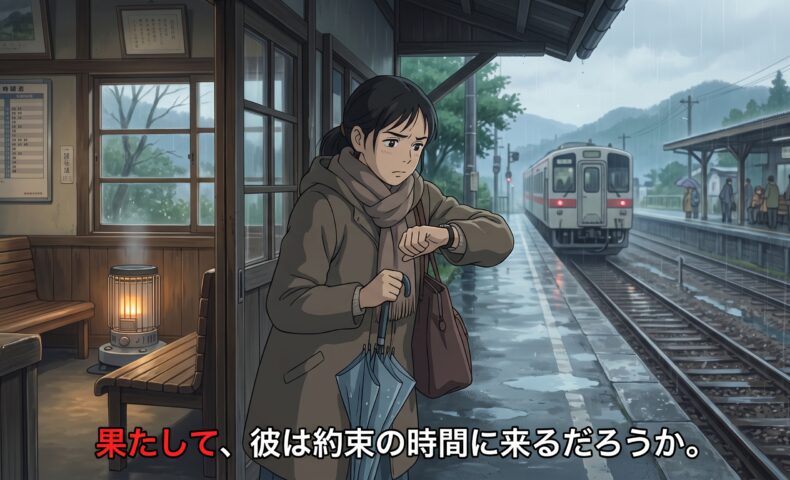
(2) 果たして、彼は約束の時間に来るだろうか / 来るでしょうか。
(3) 果たして、あの噂は本当なのだろうか / 本当なのでしょうか。
(4) 私は果たしてその仕事が自分に合っているかどうか不安だ / 不安です。
(5) 彼女は果たして試験に合格できるかどうか心配している / 心配しています。
(6) 私は果たしてあの判断が正しかったかどうか今でも迷っている / 迷っています。
ことばと表現 / Words & Expressions
果たして【はたして\ /Hatashite/】really, I wonder if, as expected
努力【どりょく\ /Doryoku/】effort, hard work
報われる【むくわれる\ /Mukuwareru/】to be rewarded, to be repaid
約束【やくそく\ /Yakusoku/】promise, appointment
噂【うわさ\ /Uwasa/】rumor, gossip
合う【あう\ /Au/】to suit, to fit, to match
不安な【ふあんな\ /Fuan na/】anxious, uneasy, worried
判断【はんだん\ /Handan/】judgment, decision
迷う【まよう\ /Mayou/】to be uncertain, to hesitate, to be lost
英語 / えいご / English
(1) I wonder if my efforts will really be rewarded.
(2) I wonder if he will really come at the promised time.
(3) I wonder if that rumor is really true.
(4) I am anxious about whether this job really suits me.
(5) She is worried about whether she will really be able to pass the exam.
(6) Even now, I am still uncertain about whether that judgment was really right.
ひらがな / Hiragana
(1) はたして、わたしのどりょくはむくわれるのだろうか / むくわれるのでしょうか。
(2) はたして、かれはやくそくのじかんにくるだろうか / くるでしょうか。
(3) はたして、あのうわさはほんとうなのだろうか / ほんとうなのでしょうか。
(4) わたしははたしてそのしごとがじぶんにあっているかどうかふあんだ / ふあんです。
(5) かのじょははたしてしけんにごうかくできるかどうかしんぱいしている / しんぱいしています。
(6) わたしははたしてあのはんだんがただしかったかどうかいまでもまよっている / まよっています。
ローマ字 / Roman characters
(1) Hatashite, watashi no doryoku wa mukuwareru no darō ka / mukuwareru no deshō ka.
(2) Hatashite, kare wa yakusoku no jikan ni kuru darō ka / kuru deshō ka.
(3) Hatashite, ano uwasa wa hontō na no darō ka / hontō na no deshō ka.
(4) Watashi wa hatashite sono shigoto ga jibun ni atte iru ka dō ka fuan da / fuan desu.
(5) Kanojo wa hatashite shiken ni gōkaku dekiru ka dō ka shinpai shite iru / shinpai shite imasu.
(6) Watashi wa hatashite ano handan ga tadashikatta ka dō ka ima demo mayotte iru / mayotte imasu.







No comments yet.