
Meaning:
「〜てある」 expresses that **someone has intentionally done something in advance**,
and the **resulting state remains**.
Grammar Point:
Used when an action is done **for a purpose**, and its result is still visible or effective.
Formation:
Verb-てform + ある(/あります)
日本語 / にほんご / Japanese
(1) この部屋は掃除してある / 掃除してあります。
(2) この部屋は涼しくしてある / 涼しくしてあります。
(3) ビールを冷やしてある / 冷やしてあります。
(4) 椅子はきれいに並べてある / 並べてあります。
(5) このノートには名前が書いてある / 書いてあります。
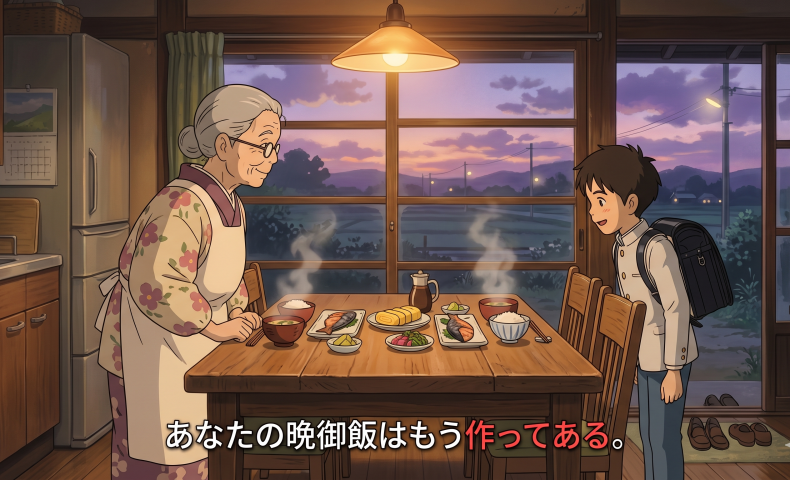
(6) あなたの晩御飯はもう作ってある / 作ってあります。
(7) 私たちはもう旅館の予約をしてある / してあります。
(8) 私たちは明日の計画を考えてある / 考えてあります。
ことばと表現 / Words & Expressions
掃除【そうじ ̄ /Sōji/】 cleaning
涼しい【すずし\い /Suzushī/】 cool
冷やす【ひ\やす /Hiyasu/】 to chill
椅子【いす ̄ /Isu/】 chair
並べる【ならべる ̄ /Naraberu/】 to arrange
名前【なまえ ̄ /Namae/】 name
旅館【りょかん ̄ /Ryokan/】 Japanese inn
予約【よやく ̄ /Yoyaku/】 reservation
計画【けいかく ̄ /Keikaku/】 plan
英語 / えいご / English
(1) This room has been cleaned (in advance).
(2) This room has been made cool.
(3) The beer has been chilled.
(4) The chairs have been neatly arranged.
(5) A name has been written in this notebook.
(6) Your dinner has already been prepared.
(7) We have already made a reservation at the inn.
(8) We have prepared tomorrow’s plan.
ひらがな / Hiragana
(1) このへやはそうじしてある / そうじしてあります。
(2) このへやはすずしくしてある / すずしくしてあります。
(3) びーるをひやしてある / ひやしてあります。
(4) いすはきれいにならべてある / ならべてあります。
(5) こののーとにはなまえがかいてある / かいてあります。
(6) あなたのばんごはんはもうつくってある / つくってあります。
(7) わたしたちはもうりょかんのよやくをしてある / してあります。
(8) わたしたちはあしたのけいかくをかんがえてある / かんがえてあります。
ローマ字 / Roman characters
(1) Kono heya wa sōji shite aru / sōji shite arimasu.
(2) Kono heya wa suzushiku shite aru / suzushiku shite arimasu.
(3) Bīru o hiyashite aru / hiyashite arimasu.
(4) Isu wa kirei ni narabete aru / narabete arimasu.
(5) Kono nōto ni wa namae ga kaite aru / kaite arimasu.
(6) Anata no bangohan wa mō tsukutte aru / tsukutte arimasu.
(7) Watashitachi wa mō ryokan no yoyaku o shite aru / shite arimasu.
(8) Watashitachi wa ashita no keikaku o kangaete aru / kangaete arimasu.













No comments yet.