
【JLPT N5★na-adjective ないform (Negative, Non-Past)】
To change a な-adjective to negative form, replace the “だ”(plain) or “です” (polite) with “ではない”(plain), “ではありません” (polite) at the end of the sentence: of the sentence:
Meaning
Used to express the negative form of na-adjectives in the present tense.
「〜ではない」is the plain form, and 「〜ではありません」is the polite form.
Formation
Noun / Na-adjective + ではない
Noun / Na-adjective + ではありません
日本語 / にほんご / Japanese
(1) あの道はきれいではない / きれいではありません。
(2) その仕事は大変ではない/大変ではありません。
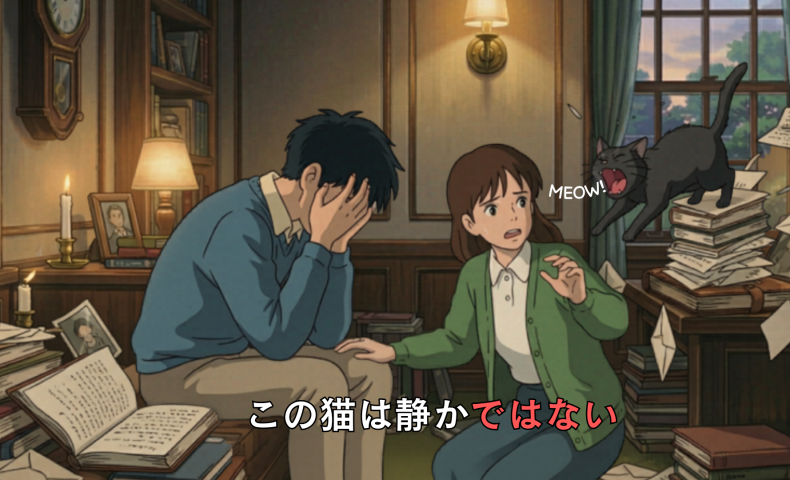
(3) この猫は静かではない / 静かではありません。
(4) 今日の駅はにぎやかではない / にぎやかではありません。
(5) あの人は自由ではない/ 自由ではありません。
(6) この音楽は好きではない/好きではありません。
ことばと表現 / Words & Expressions
道【みち michi】road, street
仕事【しごと sigoto】work, job
大変【たいへん taihen】tough, hard
にぎやか【にぎやか nigiyaka】lively, bustling
人【ひと hito】person
自由【じゆう jiyuu】free
音楽【おんがく ongaku】music
好き【すき suki】like
英語 / えいご / English
(1) That road is not clean.
(2) That job is not hard.
(3) This cat is not quiet.
(4) Today, the station is not lively.
(5) That person is not free.
(6) This music is not liked. / I do not like this music.
ひらがな / Hiragana
(1) あのみちは きれいではない / きれいではありません。
(2) そのしごとは たいへんではない / たいへんではありません。
(3) このねこは しずかではない / しずかではありません。
(4) きょうのえきは にぎやかではない / にぎやかではありません。
(5) あのひとは じゆうではない / じゆうではありません。
(6) このおんがくは すきではない / すきではありません。
ローマ字 / Roman letters
(1) Ano michi wa kirei dewa nai / kirei dewa arimasen.
(2) Sono shigoto wa taihen dewa nai / taihen dewa arimasen.
(3) Kono neko wa shizuka dewa nai / shizuka dewa arimasen.
(4) Kyou no eki wa nigiyaka dewa nai / nigiyaka dewa arimasen.
(5) Ano hito wa jiyuu dewa nai / jiyuu dewa arimasen.
(6) Kono ongaku wa suki dewa nai / suki dewa arimasen.
YouGlish / Pronunciation practice
Visit YouGlish.com




















No comments yet.