
Meaning:
Used to define, explain, or give reasons for something. Can mean “the thing called,” “the fact that,” or “the reason is” depending on context.
Grammar Point:
This pattern has two main uses: (1) To define or explain what something is or means, often translating to “the thing called [X] is…” (2) To provide a reason or explanation, especially when used as というのは at the start of a new sentence, meaning “the reason is…” It emphasizes the explanation or definition being given.
Formation:
– Noun + というのは
– Verb (plain form) + というのは
– い-adjective + というのは
– な-adjective + だ + というのは
– Sentence + 。というのは
日本語:
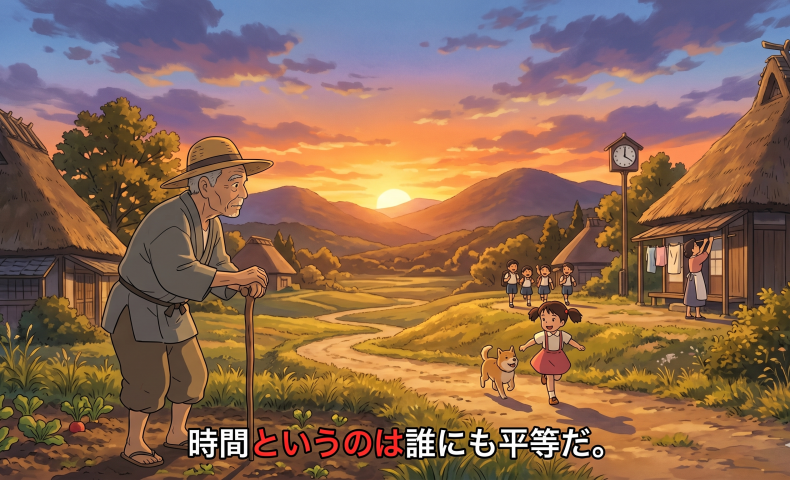
(1) 時間というのは誰にも平等だ / 誰にも平等です。
(2) 幸せというのは人それぞれ違う / 人それぞれ違います。
(3) 彼が来なかったというのは残念だ / 残念です。
(4) 彼女が引っ越したというのは聞いた / 聞きました。
(5) ジョーは留学した。というのは、日本語を学ぶためだ / 学ぶためです。
(6) 犬は吠えている。というのは、お腹が空いているからだ / お腹が空いているからです。
ことばと表現 / Words & Expressions
時間【じかん ̄ /Jikan/】time
誰【だれ ̄ /Dare/】who; anyone
平等【びょうどう ̄ /Byōdō/】equal; fair
幸せ【しあわせ ̄ /Shiawase/】happiness
人【ひと\ /Hito/】person
それぞれ【それぞれ ̄ /Sorezore/】each; respectively
違う【ちが ̄う /Chigau/】to differ; to be different
引っ越す【ひっこ ̄す /Hikkosu/】to move (house)
留学する【りゅうがく ̄する /Ryūgaku suru/】to study abroad
犬【いぬ\ /Inu/】dog
吠える【ほえ ̄る /Hoeru/】to bark
お腹が空く【おなかがす ̄く /Onaka ga suku/】to be hungry
英語 / えいご / English
(1) The thing called time is equal for everyone.
(2) The thing called happiness differs for each person.
(3) The fact that he didn’t come is disappointing.
(4) I heard that she moved.
(5) Joe studied abroad. The reason is to learn Japanese.
(6) The dog is barking. The reason is that it’s hungry.
ひらがな / Hiragana
(1) じかんというのはだれにもびょうどうだ / だれにもびょうどうです。
(2) しあわせというのはひとそれぞれちがう / ひとそれぞれちがいます。
(3) かれがこなかったというのはざんねんだ / ざんねんです。
(4) かのじょがひっこしたというのはきいた / ききました。
(5) じょーはりゅうがくした。というのは、にほんごをまなぶためだ / にほんごをまなぶためです。
(6) いぬはほえている 。というのは、おなかがすいているからだ / おなかがすいているからです。
ローマ字 / Roman letters
(1) Jikan to iu no wa dare ni mo byōdō da / Dare ni mo byōdō desu.
(2) Shiawase to iu no wa hito sorezore chigau / Hito sorezore chigaimasu.
(3) Kare ga konakatta to iu no wa zannen da / Zannen desu.
(4) Kanojo ga hikkoshita to iu no wa kiita / Kikimashita.
(5) Jō wa ryūgaku shita. To iu no wa, Nihongo wo manabu tame da / Nihongo wo manabu tame desu.
(6) Inu wa hoete iru. To iu no wa, onaka ga suite iru kara da / Onaka ga suite iru kara desu.



No comments yet.