
Meaning:
Expresses that once a certain action occurs, an inevitable and often undesirable consequence follows. Implies “once [X] happens, there’s no turning back” or “if ever [X] happens.”
Grammar Point:
This pattern emphasizes that once a particular action or state begins, a certain result inevitably follows and cannot be stopped or changed. It often carries a negative or warning nuance, suggesting that the consequence is unavoidable or extreme. The pattern can use either 〜が最後 (with past tense verb) or 〜たら最後 (with conditional form).
Formation:
– Verb (past tense) + が最後
– Verb たら-form + 最後
日本語:
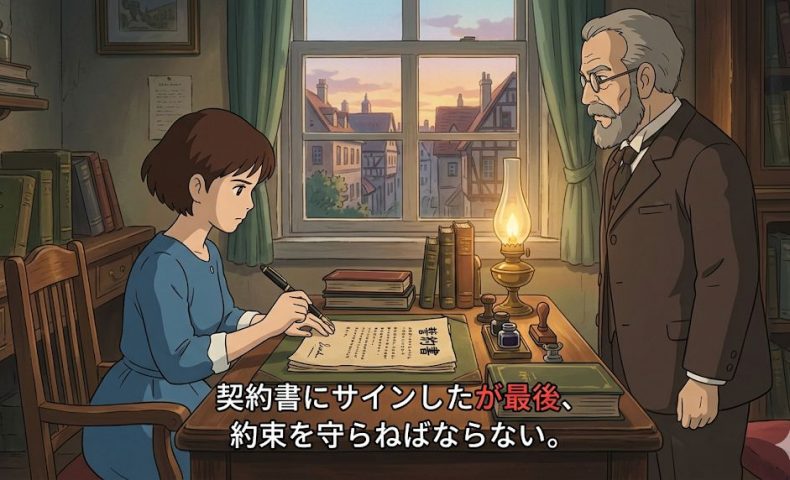
(1) 契約書にサインしたが最後、約束を守らねばならない / 守らねばなりません。
(2) 奥さんは、いったん寝たが最後、朝まで起きない / 起きません。
(3) あの同僚はお酒を飲んだが最後、倒れるまで飲み続ける / 飲み続けます。
(4) 兄は食べ始めたら最後、皿の料理をすべて食べ切る / 食べ切ります。
(5) あの国に入国したら最後、もう帰国できない / 帰国できません。
(6) 食べ出したら最後、おいしくて止まらなかった / 止まりませんでした。
ことばと表現:
契約書【けいやくしょ ̄ /Keiyakusho/】contract
サイン【さ ̄いん /Sain/】signature; to sign
約束【やくそく ̄ /Yakusoku/】promise
守る【まも ̄る /Mamoru/】to keep; to protect
奥さん【おくさん ̄ /Okusan/】wife (someone else’s)
いったん【いったん ̄ /Ittan/】once; temporarily
同僚【どうりょう ̄ /Dōryō/】colleague
お酒【おさけ ̄ /Osake/】alcohol; sake
倒れる【たお ̄れる /Taoreru/】to collapse; to fall down
皿【さら\ /Sara/】plate; dish
すべて【すべ ̄て /Subete/】all; everything
入国する【にゅうこく ̄する /Nyūkoku suru/】to enter a country
帰国する【きこく ̄する /Kikoku suru/】to return to one’s country
英語:
(1) Once you sign the contract, you must keep your promise.
(2) Once my wife goes to bed, she doesn’t wake up until morning.
(3) Once that colleague starts drinking alcohol, he keeps drinking until he collapses.
(4) Once my older brother starts eating, he finishes all the food on the plate.
(5) Once you enter that country, you can no longer return home.
(6) Once I started eating, it was so delicious I couldn’t stop.
ひらがな:
(1) けいやくしょにさいんしたがさいご、やくそくをまもらねばならない / まもらねばなりません。
(2) おくさんは、いったんねたがさいご、あさまでおきない / おきません。
(3) あのどうりょうはおさけをのんだがさいご、たおれるまでのみつづける / のみつづけます。
(4) あにはたべはじめたらさいご、さらのりょうりをすべてたべきる / たべきります。
(5) あのくににゅうこくしたらさいご、もうきこくできない / きこくできません。
(6) たべだしたらさいご、おいしくてとまらなかった / とまりませんでした。
ローマ字:
(1) Keiyakusho ni sain shita ga saigo, yakusoku wo mamoraneба naranai / Mamoraneba narimasen.
(2) Okusan wa, ittan neta ga saigo, asa made okinai / Okimasen.
(3) Ano dōryō wa osake wo nonda ga saigo, taoreru made nomitsuzukeru / Nomitsuzukemasu.
(4) Ani wa tabehajimetara saigo, sara no ryōri wo subete tabekiru / Tabekimasu.
(5) Ano kuni ni nyūkoku shitara saigo, mō kikoku dekinai / Kikoku dekimasen.
(6) Tabedashitara saigo, oishikute tomaranakatta / Tomarimasen deshita.





No comments yet.